
 (931) 542-9420
 riversidespinephysmed@gmail.com
 121 W Dunbar Cave Rd, Clarksville, TN 37040
The Body Can Heal. Sometimes It Just Needs a Better Prompt.
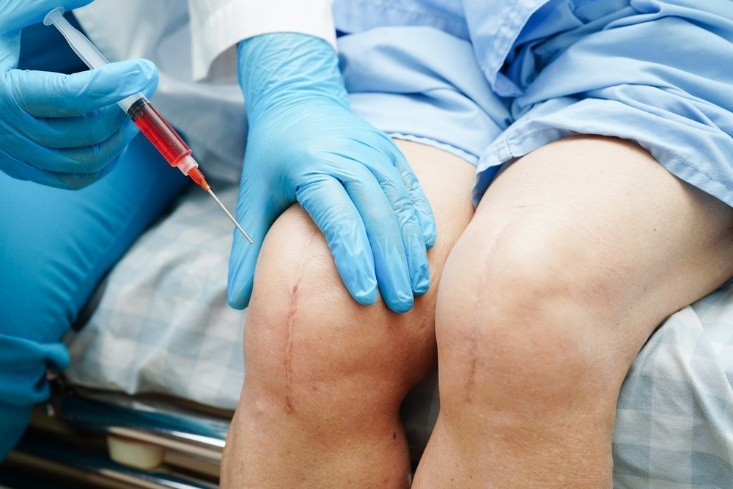
There are injuries the body handles on its own. And then there are the ones where the normal repair process stalls: tendons that stay painful for months, joints that stay inflamed long after the initial damage, tissue that seems to have simply given up trying. Clarksville PRP injections at Riverside Spine & Physical Medicine are intended to support the body’s natural healing response in situations where tissue has not recovered through standard treatment alone.
Platelet-rich plasma is prepared from a small sample of your own blood. That sample is spun in a centrifuge to concentrate the platelets well above their normal circulating levels. Platelets carry growth factors, the proteins that tell the surrounding tissue to repair, rebuild, and reduce inflammation. Injecting that concentration directly into the damaged area delivers those instructions where the body needs them most.
What Conditions Respond to PRP?
The strongest clinical evidence for Clarksville PRP injections currently supports lateral epicondylitis, also known as tennis elbow, where multiple randomized trials show meaningful pain reduction and functional improvement beyond six months. Research also supports PRP for knee osteoarthritis, patellar tendinopathy, and rotator cuff conditions.
At Riverside, PRP is used as part of a broader clinical picture rather than as a first-line response to every joint complaint. The evaluation comes first. That means confirming the diagnosis, reviewing what conservative treatments have already been tried, and determining whether PRP is the right tool for what’s happening in that specific tissue.
Ultrasound guidance is used during injection to ensure accurate placement. Ultrasound guidance helps ensure accurate placement of the injection within the targeted tissue, which is an important part of delivering the treatment where it is intended to go.
What to Expect From the Process
The procedure itself takes less than an hour from blood draw to injection. Some soreness at the injection site is normal in the days that follow and is generally well tolerated. If you experience discomfort after the procedure, let the clinical team know. Most patients return to light activity within a day or two.
Results develop gradually. Unlike cortisone, which suppresses inflammation quickly but often temporarily, PRP works on a biological timeline. Meaningful improvement typically develops over six to twelve weeks as the tissue responds and remodels.
One to three injections are standard, depending on the condition and how the tissue responds after the first treatment. The clinical team at Riverside Spine & Physical Medicine monitors progress throughout and adjusts the plan based on objective response rather than a fixed protocol.
Is PRP Right for You?
The patients who see the clearest benefit from PRP therapy in Clarksville at Riverside are typically those with chronic, degenerative tendon or joint conditions that haven’t responded adequately to physical therapy, activity modification, or anti-inflammatory treatment over several months. Acute injuries in otherwise healthy tissue generally respond well to conservative care alone.
If you’ve been managing the same joint pain for longer than it should take to resolve, a consultation at Riverside Spine & Physical Medicine is the right starting point. The evaluation determines whether PRP fits your clinical picture. If it does not, the team will identify what does.
Frequently Asked Questions
Is PRP covered by insurance?
Most insurers classify PRP as elective and do not cover it. Costs vary based on the number of injections required. The team at Riverside can provide a clear cost estimate at your consultation.
How is PRP different from a cortisone injection?
Cortisone suppresses inflammation quickly but often temporarily, and repeated use can weaken tendon tissue over time. PRP works regeneratively, supporting tissue repair rather than masking the underlying condition. The clinical evidence for PRP shows more durable outcomes for chronic tendinopathy beyond the six-month mark.
Can PRP be combined with other treatments?
Yes. At Riverside Spine & Physical Medicine, PRP is often integrated with physical therapy and chiropractic care as part of a coordinated treatment plan. The combination addresses both the biological repair process and the mechanical factors that may be contributing to ongoing tissue stress.